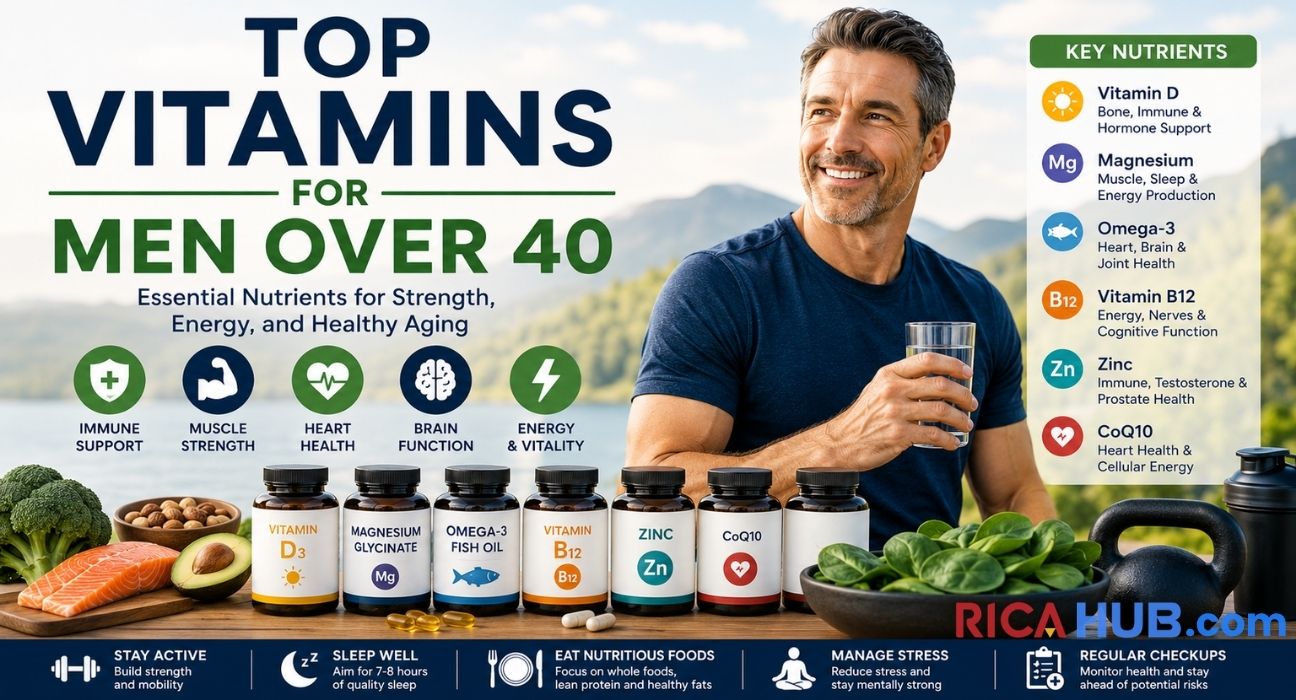
As men enter their 40s, the body naturally begins to change. Energy levels may decline, metabolism slows down, muscle mass gradually decreases, and recovery takes longer than it once did. Many men also begin to notice joint discomfort, weight gain, reduced stamina, or changes in heart and prostate health.
While a balanced diet remains the foundation of good health, modern lifestyles, stress, processed foods, and aging can make it difficult to obtain all essential nutrients from food alone. This is why many health experts recommend targeted vitamin and mineral support for men over 40.
In this article, we’ll explore the top vitamins for men over 40, their scientifically supported benefits, practical wellness tips, and how the right nutritional support may help improve long-term health and vitality.
Why Men Over 40 Need Different Nutritional Support
After age 40, several biological changes begin to affect overall wellness:
- Testosterone levels gradually decline
- Bone density may decrease
- Muscle recovery becomes slower
- Cardiovascular risks increase
- Metabolism becomes less efficient
- Chronic inflammation may rise
- Nutrient absorption can weaken with age
Because of these changes, men over 40 often require more focused nutritional support than younger adults.
Proper vitamins and minerals can help support:
- Heart health
- Brain function
- Muscle strength
- Immune defense
- Hormonal balance
- Energy production
- Healthy aging
1. Vitamin D — The Foundation of Men’s Health
Vitamin D is one of the most important nutrients for men over 40. Unfortunately, deficiency is extremely common worldwide.
Benefits of Vitamin D
- Supports testosterone production
- Helps maintain strong bones
- Improves immune function
- Supports mood and mental health
- May reduce inflammation
Scientific studies suggest low vitamin D levels are associated with fatigue, low mood, weakened immunity, and reduced muscle performance.
Natural Sources
- Sunlight exposure
- Fatty fish
- Egg yolks
- Fortified dairy products
Practical Tip
Men who work indoors or get limited sun exposure may benefit from regular vitamin D testing and supplementation under professional guidance.
2. Magnesium — Essential for Energy and Recovery
Magnesium participates in hundreds of biochemical reactions inside the body.
Many adults do not consume enough magnesium due to modern processed diets.
Benefits of Magnesium
- Supports muscle recovery
- Improves sleep quality
- Helps regulate blood pressure
- Supports nerve function
- Assists energy production
Magnesium may also help reduce muscle cramps and support stress management.
Food Sources
- Spinach
- Almonds
- Pumpkin seeds
- Avocados
- Dark chocolate
3. Omega-3 Fatty Acids — Heart and Brain Protection
Although technically not a vitamin, omega-3 fatty acids are critical for healthy aging.
Benefits of Omega-3s
- Supports heart health
- Helps maintain healthy cholesterol levels
- Supports brain function
- May reduce inflammation
- Supports joint comfort
Research consistently shows omega-3 intake is associated with improved cardiovascular health.
Best Sources
- Salmon
- Sardines
- Mackerel
- Fish oil supplements
4. Vitamin B12 — Energy and Cognitive Support
Vitamin B12 becomes increasingly important with age because absorption efficiency often declines.
Benefits of Vitamin B12
- Supports energy metabolism
- Helps maintain healthy nerves
- Supports brain function
- Assists red blood cell production
Low B12 levels may contribute to fatigue, memory issues, and weakness.
Food Sources
- Meat
- Fish
- Eggs
- Dairy products
Vegetarians and older adults may need additional supplementation.
5. Zinc — Immune and Testosterone Support
Zinc plays an important role in men’s health and hormone function.
Benefits of Zinc
- Supports immune defense
- Helps maintain testosterone levels
- Supports wound healing
- May assist prostate health
Good Sources
- Oysters
- Beef
- Pumpkin seeds
- Nuts
Excessive zinc intake should be avoided, so balance is important.
6. CoQ10 — Cellular Energy and Heart Support
Coenzyme Q10 (CoQ10) naturally declines with age.
Benefits of CoQ10
- Supports heart function
- Assists cellular energy production
- Acts as an antioxidant
- May support exercise performance
Some studies suggest CoQ10 may be especially helpful for men taking cholesterol-lowering medications.
Scientific Insights on Healthy Aging
Modern research increasingly shows that healthy aging is strongly connected to:
- Reduced chronic inflammation
- Better mitochondrial function
- Balanced nutrition
- Physical activity
- Sleep quality
- Stress management
Vitamins alone are not “magic solutions,” but they can play an important supporting role in a healthy lifestyle.
Experts generally recommend combining proper supplementation with:
- Regular exercise
- Strength training
- Whole-food nutrition
- Adequate hydration
- Quality sleep
- Routine medical checkups
Practical Lifestyle Tips for Men Over 40
1. Prioritize Strength Training
Muscle mass naturally declines with age. Resistance training helps maintain strength, metabolism, and hormone balance.
2. Improve Sleep Quality
Poor sleep negatively affects testosterone, recovery, and energy levels.
Aim for 7–8 hours of quality sleep nightly.
3. Reduce Processed Foods
Highly processed foods may increase inflammation and contribute to weight gain.
Focus on:
- Lean protein
- Vegetables
- Healthy fats
- Fiber-rich foods
4. Stay Consistent
Health improvements come from long-term habits, not short-term fixes.
Frequently Asked Questions (FAQ)
What is the best vitamin for men over 40?
There is no single “best” vitamin. However, vitamin D, magnesium, omega-3s, B12, and zinc are commonly considered essential for men over 40.
Should men over 40 take multivitamins?
A high-quality multivitamin may help fill nutritional gaps, especially for busy adults or those with dietary restrictions.
Can vitamins increase testosterone naturally?
Some nutrients like vitamin D, zinc, and magnesium may support healthy testosterone levels when deficiencies exist.
Are supplements safe?
Most supplements are safe when used responsibly. However, it’s important to follow dosage recommendations and consult healthcare professionals if needed.
Can diet replace supplements?
A healthy diet should always be the primary goal. Supplements are intended to support—not replace—good nutrition.
Soft Affiliate Product Recommendations
For readers looking to improve overall wellness, some popular health-support products may include:
- High-quality men’s multivitamins
- Omega-3 fish oil supplements
- Magnesium glycinate
- Vitamin D3 + K2 formulas
- Prostate health support supplements
- Healthy aging nutritional programs
When choosing supplements, prioritize:
- Third-party tested products
- Transparent ingredient labels
- Trusted manufacturers
- Scientifically supported formulations
Turning 40 does not mean slowing down—it means becoming more intentional about health.
With proper nutrition, regular exercise, quality sleep, and targeted vitamin support, men over 40 can maintain strength, energy, focus, and long-term vitality.
Small daily habits often create the biggest long-term results.
Investing in health today may help improve quality of life for many years to come.